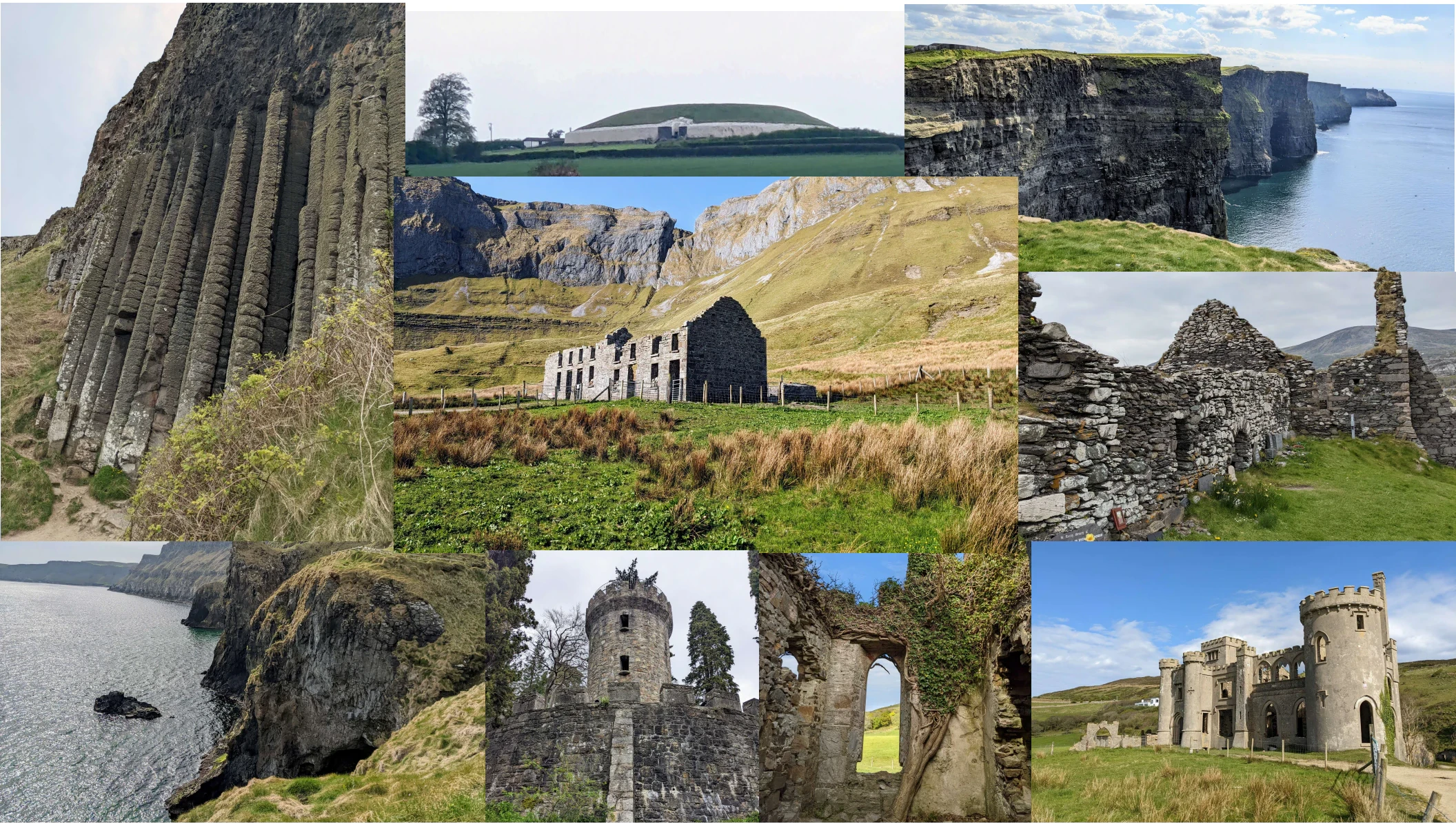
Ireland
The Journey
Some journeys are defined by geography. Others are defined by culture.
What stood out was not simply where we traveled, but how often the landscape seemed to carry stories of its own. Mountains were rarely just mountains. Ancient earthworks were not merely archaeological remains. Cliffs, valleys, stone circles, castles, and lonely stretches of coastline all seemed attached to narratives that remained remarkably alive.
The stories varied across the island.
Some belonged to saints. Some belonged to kings. Some belonged to giants, warriors, and supernatural beings whose names have survived for centuries.
What made Ireland unusual was not whether those stories were historically accurate. It was that the stories still mattered. Locations revealed themselves through both history and legend, often at the same time.
Newgrange is an archaeological monument older than the pyramids. It is also connected to tales of gods and immortals. The Hill of Tara was once the ceremonial seat of Ireland’s High Kings. It remains a symbolic place in Ireland’s cultural memory.
The Giant’s Causeway is a geological wonder created by volcanic activity. Yet most visitors immediately encounter the story of Finn McCool. History and folklore coexist without competing. Neither attempts to replace the other. Together they create something uniquely Irish.
Looking back, the journey became less about visiting individual sites and more about understanding how a culture preserves its connection to the past through storytelling. Not stories preserved behind museum glass. Stories still attached to places. Stories that continue to shape how people understand the landscape around them.
The Route (Context)
Dublin → Wicklow → Kilkenny → Cork → Killarney → Ring of Kerry → Dingle Peninsula → Cliffs of Moher → Galway → Connemara → Sligo → Donegal → Malin Head → Giant’s Causeway → Belfast → Newgrange
A journey through ancient kingdoms, monastic settlements, Atlantic coastlines, mountain passes, castle ruins, and sacred landscapes.
The route crossed nearly every major historical region of the island.
Yet the strongest connections often came from stories rather than geography.
The Itinerary (Reference)
Ireland at a Glance
Day 1–5: Dublin
St. Stephen’s Green → St. Patrick’s Cathedral → Grafton Street → National Gallery of Ireland → Chester Beatty Library → Jameson Distillery → Malahide Castle
Day 6: Wicklow & Kildare
Powerscourt Gardens → Powerscourt Waterfall → Wicklow Mountains → Straffan → The K Club → Curragh Racecourse → Irish National Stud
Day 7: Kilkenny → Cork → Killarney
Kilkenny Castle → St. Canice’s Cathedral → English Market → Nano Nagle Place → Blarney Castle → Blarney Stone → Killarney
Day 8: Ring of Kerry
Killarney National Park → Torc Waterfall → Ladies View → Muckross House → Kenmare → Derrynane Abbey → Skellig Experience → Ballycarbery Castle → Cahergall Stone Fort → Rossbeigh Strand → Gap of Dunloe
Day 9: Dingle Peninsula → Cliffs of Moher → Galway
Minard Castle → Dingle → Blennerville Windmill → Adare → Adare Manor → Cliffs of Moher → Doolin → Galway
Day 10: Connemara
Quiet Man Bridge → Clifden Castle → Kylemore Abbey → Ashford Castle → Cong → John Wayne Statue → Sligo
Day 11: Sligo → Donegal
Gleniff Horseshoe → Benbulben → Fairy Bridges → Slieve League → Salmon Leap → One Man’s Pass → Bunglas Viewpoint → Derry
Day 12: Inishowen Peninsula & Causeway Coast
Grianan of Aileach → Fort Dunree → Mamore Gap → Glenevin Waterfall → Doagh Famine Village → Five Finger Strand → Malin Head → Kinnagoe Bay → Giant’s Causeway → Dunseverick Falls → Carrick-a-Rede Rope Bridge → Old Bushmills Distillery → Dark Hedges → Belfast
Day 13: Belfast
Belfast City Hall → Titanic Belfast → Cathedral Quarter → Peace Wall
Day 14: Mourne Mountains & Boyne Valley
Slieve Donard → Tollymore Forest Park → Newgrange → Hill of Tara → Trim Castle → Dublin Airport
Journey Theme: Places where history never fully replaced legend.
Distance: Approximately 2,000 km (1,250 miles)
Regions: Dublin • Wicklow • Ancient East • Kerry • Dingle Peninsula • Wild Atlantic Way • Connemara • Donegal • Inishowen • Causeway Coast • Belfast • Boyne Valley
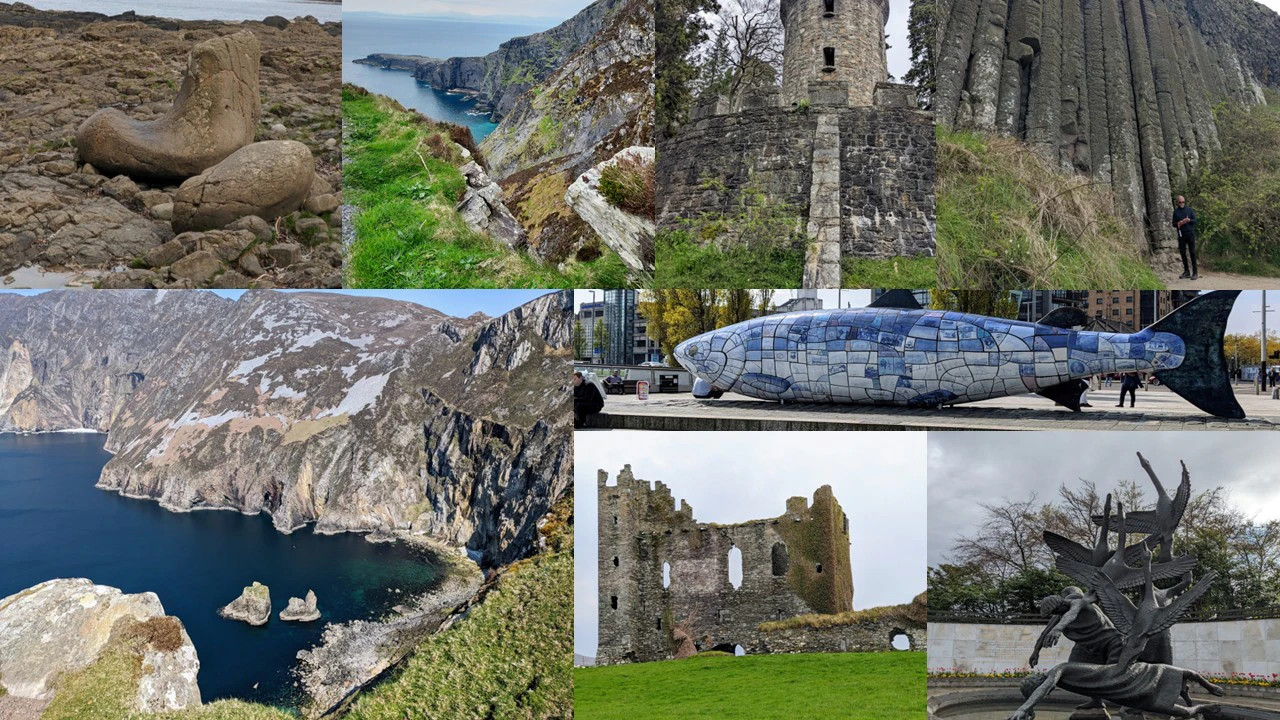
The Myth Thread — Four Stories, One Island
Long before Ireland’s history was written, its stories were sung.
Generations of poets, storytellers, and monks preserved tales of gods, warriors, giants, kings, and supernatural beings who shaped the island’s earliest identity.
Many of those stories survive today through four great narrative traditions. Together, they form the foundation of Irish mythology.
The Mythological Cycle
The earliest stories tell of the Tuatha Dé Danann, a mysterious people said to possess supernatural powers, immense knowledge, and mastery of magic.
According to legend, they arrived in Ireland beneath dark clouds that covered the sky for days. Upon landing, they burned their ships so there could be no retreat.
The Tuatha Dé Danann carried four sacred treasures:
- The Stone of Destiny, which cried out when touched by the rightful king.
- The Spear of Lugh, impossible to defeat in battle.
- The Sword of Nuada, from which no enemy could escape.
- The Cauldron of the Dagda, a vessel that never ran empty.
Among their greatest heroes was Lugh, a warrior, craftsman, poet, and king whose talents seemed limitless. He led the Tuatha Dé Danann in battle against the Fomorians, a race of destructive supernatural beings associated with chaos, darkness, and the sea.
When their rule eventually ended, the Tuatha Dé Danann did not disappear. Instead, they retreated beneath Ireland’s hills and ancient mounds, becoming the Aos Sí, the fairy folk of later tradition.
Suddenly places like Newgrange and the Boyne Valley become more than archaeological sites. They become doorways between worlds.
The Ulster Cycle
If the Mythological Cycle tells of gods, the Ulster Cycle tells of heroes.
Its central figure is Cú Chulainn, often called Ireland’s greatest warrior. The stories begin when a young boy named Setanta killed a fierce guard dog in self-defense. To repay the owner, he offered to take the dog’s place until a replacement could be raised. From that day forward he became known as Cú Chulainn, the Hound of Culann.
His legends describe extraordinary strength and courage.
In battle he entered a supernatural state known as the ríastrad, sometimes translated as a warp-spasm. His body twisted, his eye sank into his head while the other bulged outward, and he became nearly unstoppable.
His greatest story comes during the Táin Bó Cúailnge, the Cattle Raid of Cooley. While the warriors of Ulster lay helpless under a magical curse, Cú Chulainn stood alone against an invading army, challenging champions one by one to protect his homeland.
The story transformed him into a symbol of sacrifice, courage, and loyalty far beyond his own lifetime.
The Fenian Cycle
If Irish mythology has a folk hero, it is Fionn mac Cumhaill.
Warrior. Hunter. Poet.
Leader of the legendary band known as the Fianna.
Unlike many heroic figures, Fionn’s stories are filled with adventure, wisdom, humor, and wonder. His greatest gift came accidentally. While preparing a magical salmon said to contain all the world’s knowledge, he burned his thumb and instinctively placed it in his mouth. In that moment he gained extraordinary wisdom. Thereafter, whenever he touched his thumb to his teeth, hidden knowledge became available to him.
Fionn appears throughout Ireland. Mountains, lakes, valleys, and stone formations are attached to his adventures. Most famously, legend says he built the Giant’s Causeway as a bridge to Scotland so he could confront the giant Benandonner. When he discovered his rival was far larger than expected, Fionn’s wife disguised him as a baby. Seeing the enormous infant, Benandonner imagined how large the father must be and fled in terror, destroying the bridge behind him. (more about this below).
The surviving fragments became the Giant’s Causeway.
Whether believed literally or not, the story gives personality to the landscape. The coastline becomes part of a narrative rather than merely a geological feature.
The Cycles of the Kings
The final collection of stories occupies a space between mythology and history.
The Kings Cycle tells of rulers, dynasties, succession, ambition, and power. Its symbolic heart is the Hill of Tara, long regarded as the seat of Ireland’s High Kings.
One of its most famous figures is Cormac mac Airt, remembered as the ideal king. Legends describe him as wise, just, and committed to fairness above personal gain. Stories claim that during his reign wolves and lambs could drink from the same stream in peace.
Whether true or not, the image reveals what ancient Ireland believed a good ruler should be. The Kings Cycle is less concerned with supernatural battles than with leadership itself. What makes a ruler worthy? What responsibilities accompany power? How should justice be administered?
These questions were as relevant centuries ago as they are today.
Why These Stories Endure
Many mythologies survive in books.
Irish mythology survives in the landscape. Ancient passage tombs become entrances to the Otherworld. Coastlines become battlefields of giants. Hills become royal capitals. Mountains become monuments to legendary warriors.
As the journey moved through Newgrange, Kerry, Donegal, Giant’s Causeway, and Tara, it became clear why the stories endured.
The scenery often feels larger than ordinary life.
The myths simply gave people a way to explain what they saw. And perhaps that is why the stories remain so compelling.
Taken together, the four cycles reveal something deeper than individual stories.
The heroes are different. The eras are different. The challenges are different. Yet each cycle explores a recurring theme: what it means to belong to Ireland.
The Tuatha Dé Danann explain its mythical origins. Cú Chulainn defends it. Fionn wanders across it. The High Kings attempt to rule it.
Across centuries of storytelling, the landscape remains the constant character connecting them all.
Perhaps that is why Irish mythology feels uniquely attached to place. The stories are not simply set in Ireland. They are about Ireland.
Newgrange
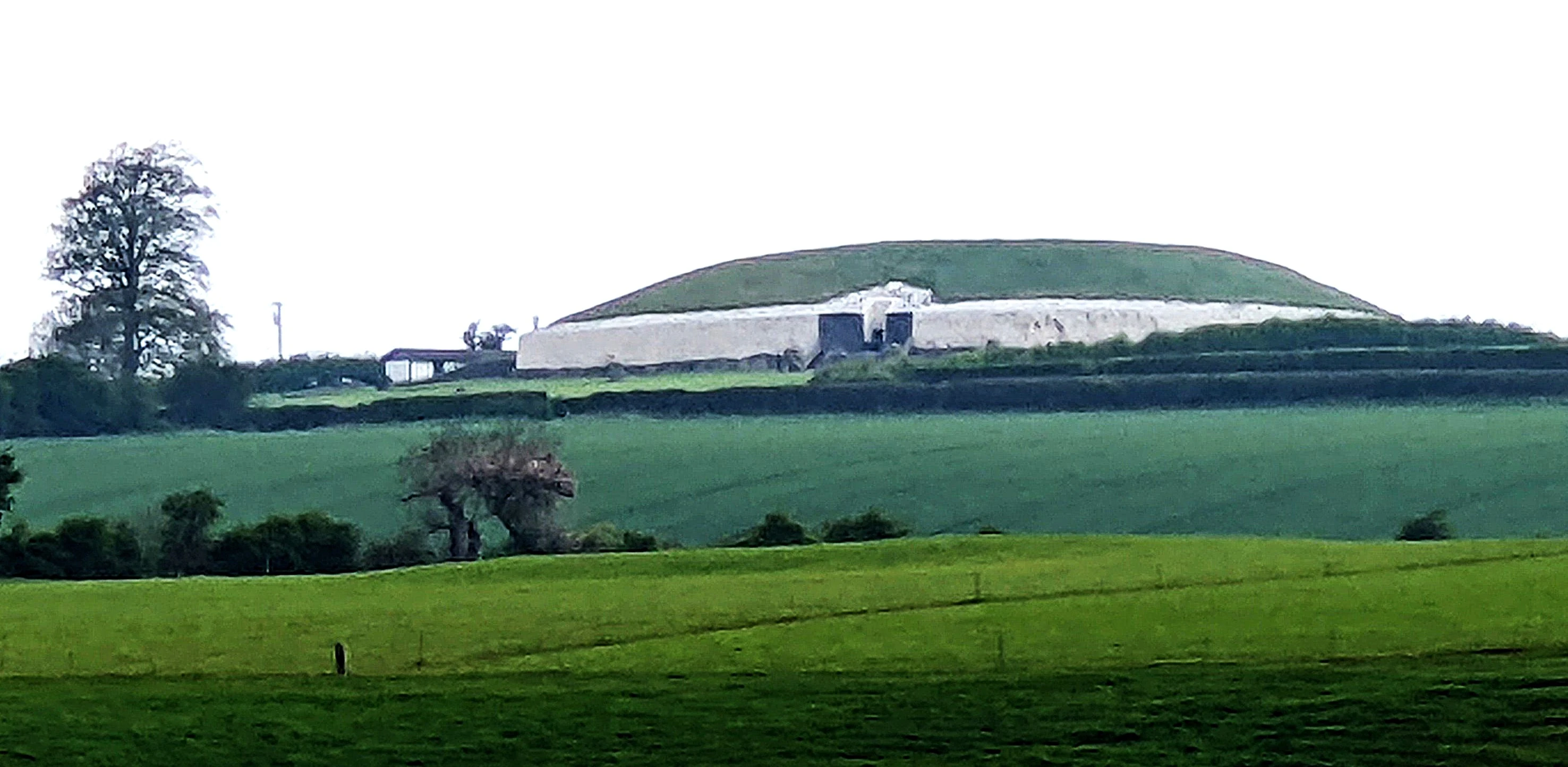
Newgrange is often introduced through statistics.
Older than Stonehenge. Older than the Egyptian pyramids. Those facts are impressive.
Standing before it, however, the structure feels less like a monument and more like a statement. Five thousand years ago, people chose this hill and built something designed to interact with the winter solstice sunrise. Its survival is remarkable.
The continuity surrounding it may be even more remarkable. Long after its builders disappeared, later generations incorporated Newgrange into their own understanding of the world.
The site became part of Ireland’s mythology as well as its history.
Ring of Kerry
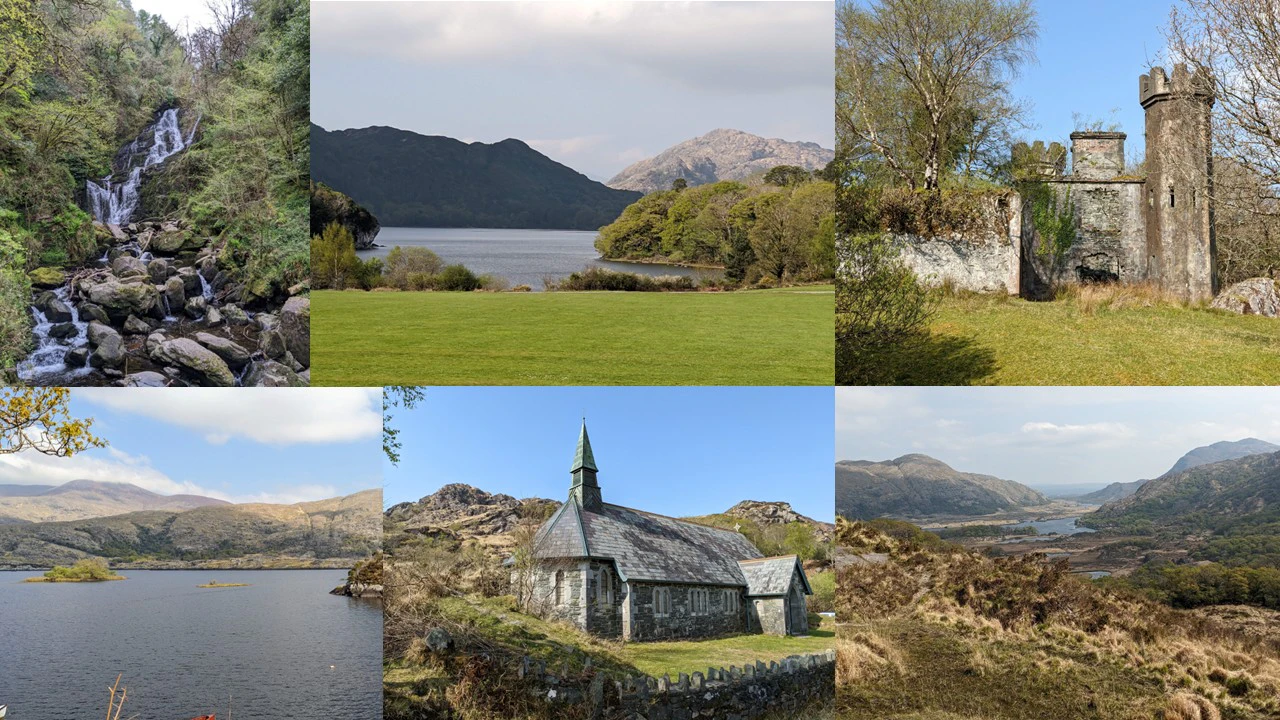
The Ring of Kerry revealed another version of Ireland. The roads curved around mountains, bays, stone walls, and isolated villages. Ruins appeared unexpectedly. Ancient forts overlooked modern roads.
Weather moved constantly across the landscape. The scenery felt dramatic, but never theatrical. Life seemed shaped by geography in ways still visible centuries later.
Dingle and the Atlantic Edge
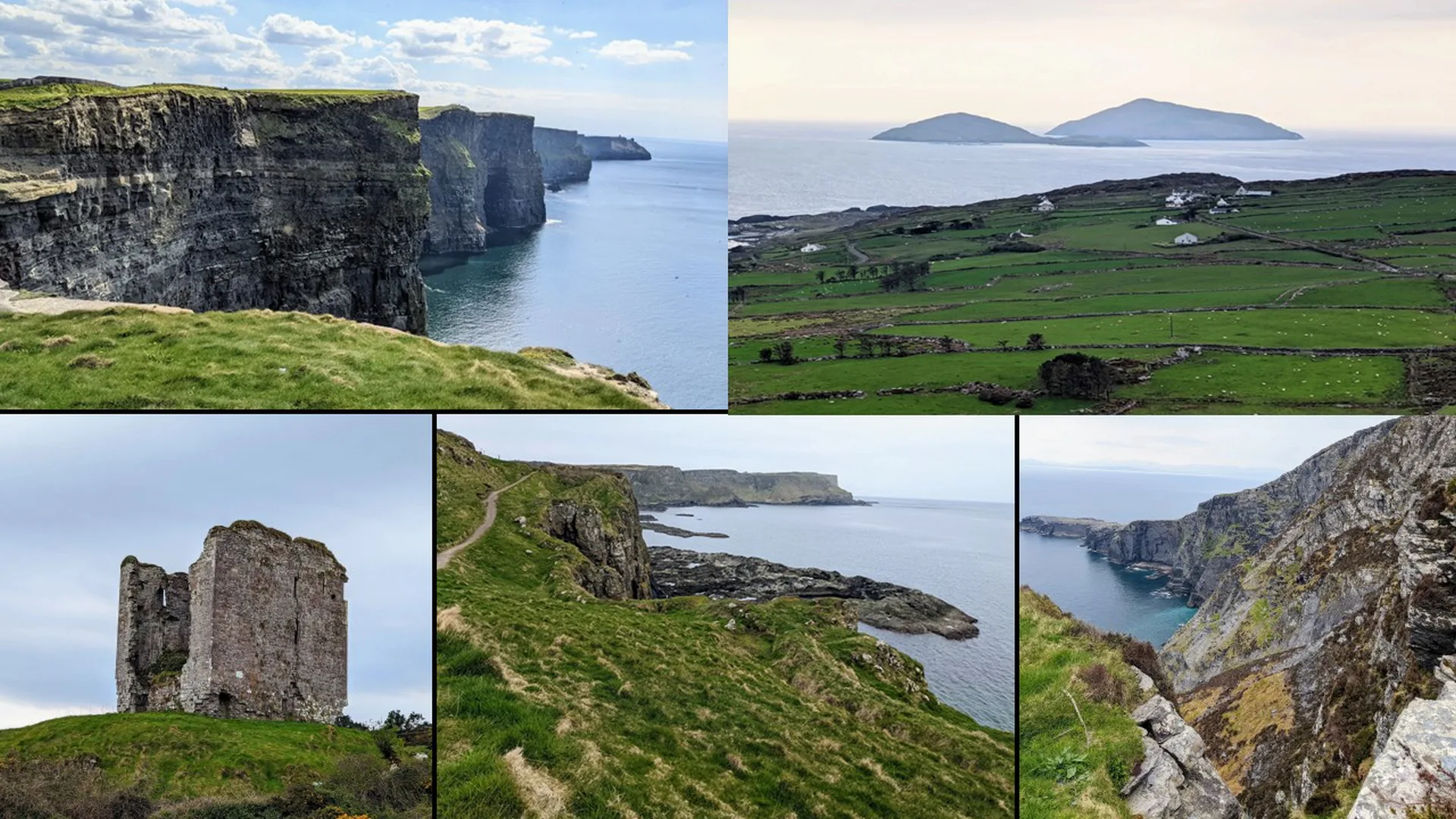
The farther west the route traveled, the stronger the sense of living at the edge of something.
Beyond the Dingle Peninsula lay open Atlantic Ocean. For thousands of years this coastline represented both opportunity and uncertainty. Monks departed into unknown waters. Traders arrived from distant lands. Generations built stories explaining the forces they encountered.
Looking west, it becomes easy to understand why.
Donegal and the North
Donegal felt older. Not historically older. Spiritually older.
The landscapes became larger. The settlements became smaller. Places like Slieve League and Malin Head created a sense of distance not measured in miles.
The region preserved a feeling of remoteness that has largely disappeared elsewhere. The Atlantic dominates here. Human presence adapts.
Giant’s Causeway
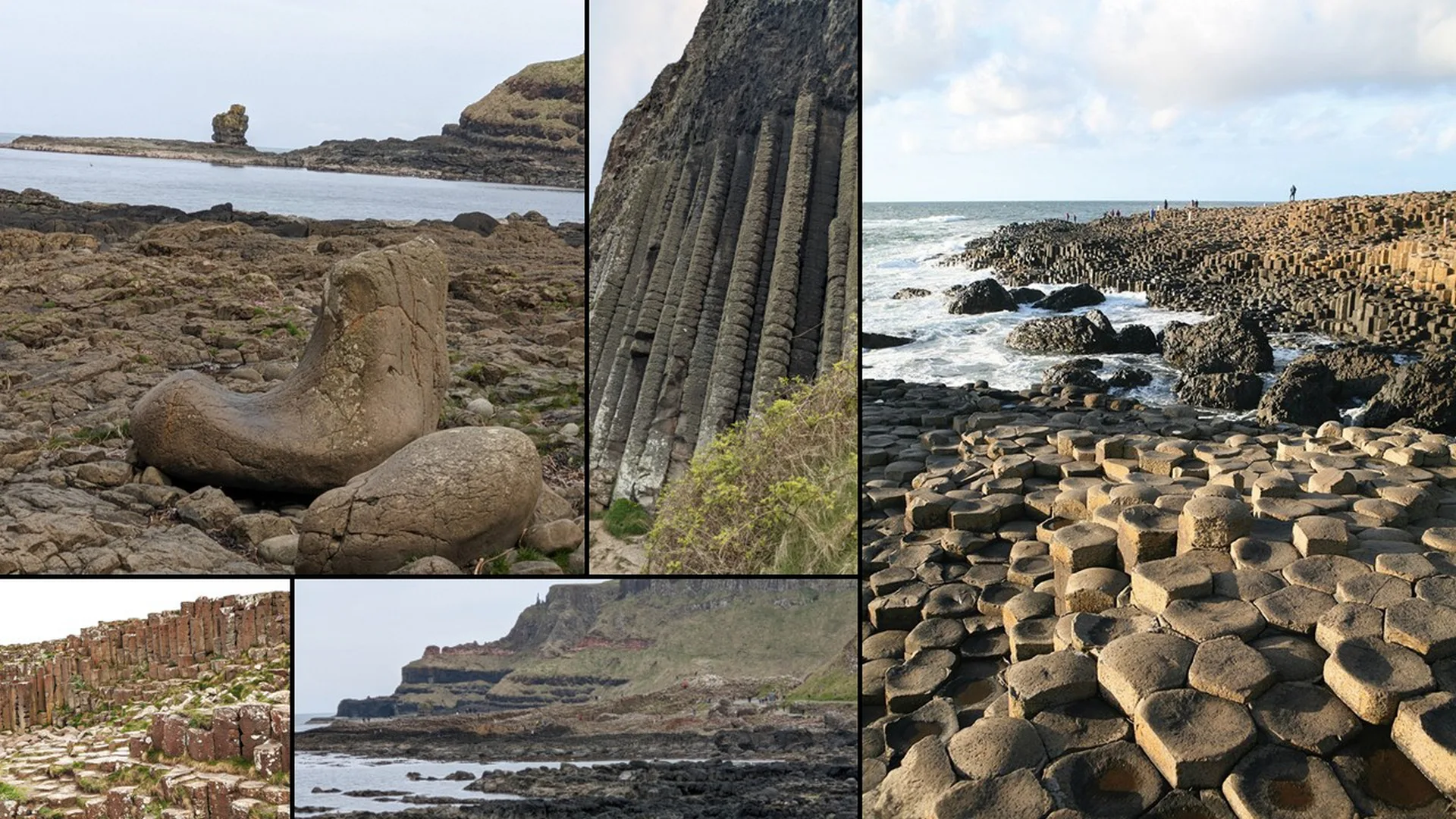
The most famous story associated with Fionn mac Cumhaill concerns the dramatic basalt columns along Ireland’s northern coast known as the Giant’s Causeway.
According to legend, Fionn was challenged by a Scottish giant named Benandonner.
Determined to meet his rival, Fionn built a massive stone bridge across the North Channel connecting Ireland and Scotland. The pathway stretched from coast to coast, allowing the two giants to confront one another.
Before the meeting could take place, Benandonner crossed the bridge and approached Ireland.
Upon seeing him, Fionn realized the Scottish giant was far larger and more powerful than he had imagined. Concerned for her husband’s safety, Fionn’s wife Oonagh devised a plan. She disguised Fionn as a baby and placed him in a cradle. When Benandonner arrived and saw the enormous infant, he was astonished. If the child was that large, he reasoned, the father must be truly enormous. Fearing what might happen if he remained, the Scottish giant fled back toward Scotland in panic, tearing apart the stone bridge behind him to prevent pursuit. The fragments that remained became the Giant’s Causeway.
Today, visitors encounter thousands of interlocking basalt columns created by ancient volcanic activity. Science explains how the stones formed. The legend explains why they became unforgettable.
Like many Irish myths, the story reflects qualities admired in traditional folklore. Strength matters. But wisdom and ingenuity matter more. Few places illustrate Ireland’s blending of myth and reality more effectively.
Science explains the basalt columns. Legend explains why people remember them. Neither diminishes the other.
Visitors arrive curious about the geology. Many leave remembering the giant. That coexistence captures something essential about Ireland itself.
The landscape provides the foundation. The stories provide the meaning.
Afterthoughts
That balance may be Ireland’s most enduring quality.
Before visiting Ireland, I expected memorable scenery. I expected castles. I expected dramatic coastlines. What I did not expect was how often the landscape itself would feel like part of a larger conversation between history, memory, and storytelling.
Throughout the journey, stories appeared everywhere. Some explained how Ireland began. Some celebrated heroes who defended it. Some followed warriors and wanderers who crossed it. Some explored the responsibilities of those who governed it.
The names changed. The centuries changed. Yet the landscape remained the constant thread connecting them all.
Newgrange carried memories of the Tuatha Dé Danann. The north recalled the age of Cú Chulainn. The Atlantic coast belonged to the adventures of Fionn mac Cumhaill. The Hill of Tara echoed with stories of kings and sovereignty.
Taken individually, these were simply places separated by distance. Taken together, they revealed something more enduring.
The stories were never really about gods, giants, warriors, or kings. They were attempts to understand place. Perhaps that is why Irish mythology feels different from many ancient traditions.
The legends remain attached to the landscape itself. A mountain is never entirely just a mountain. A hill is never entirely just a hill. A coastline is never entirely just a coastline. Each carries memories, stories, and meanings accumulated over centuries.
Looking back, the journey became less about traveling across Ireland and more about discovering the ways Ireland remembers itself.
Long after the specific routes, castles, and viewpoints fade from memory, that connection between place and story remains what I remember most. The roads lead forward. The stories remain.
What stayed.
The most memorable aspect of Ireland was not a single castle, cliff, or viewpoint. It was the enduring relationship between place and story. Modern Ireland is a dynamic, contemporary country. Yet throughout the journey, ancient narratives continued appearing alongside daily life. Not as relics. Not as performances. As part of the landscape itself.
Long after individual details fade, that connection remains what I remember most.
Field photographs from the Ireland journey
More Field Notes
See other movements across landscapes: