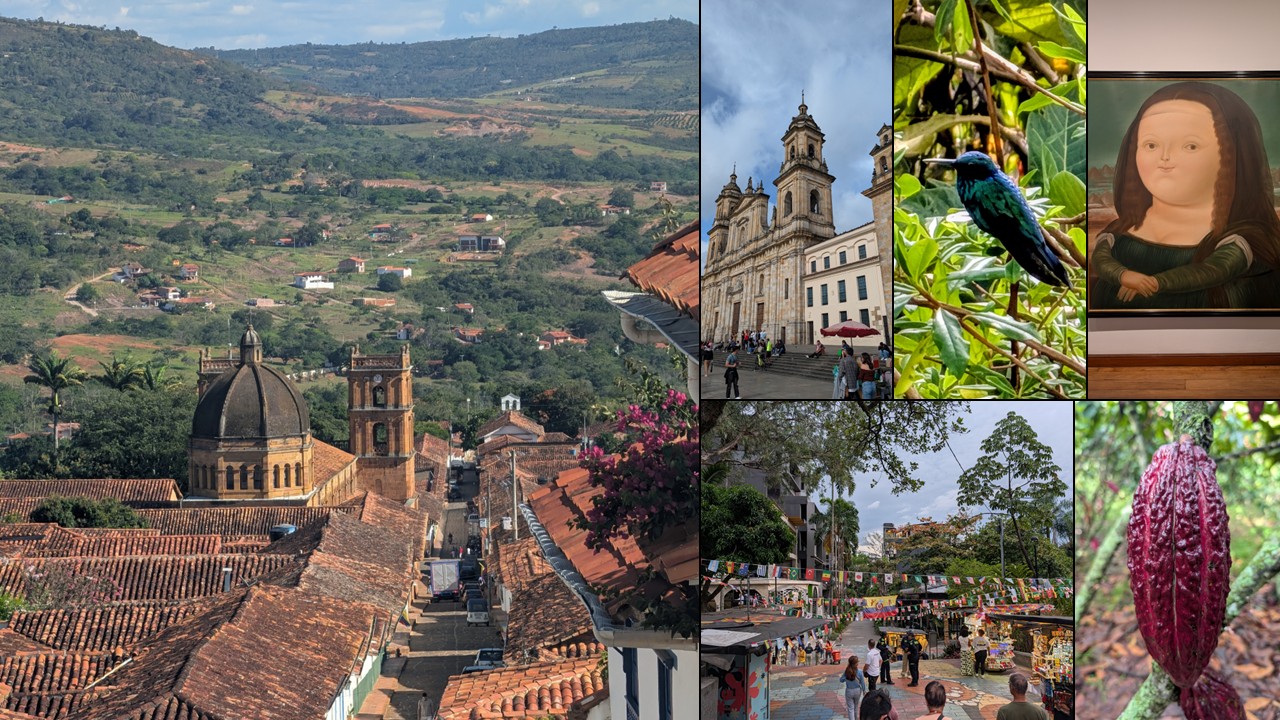
Colombia
Some countries reveal themselves quickly. Others take time. Colombia belonged firmly in the second category.
At first, the journey appeared difficult to define. The route crossed mountain cities, colonial towns, coffee farms, artisan workshops, canyon landscapes, vibrant urban neighborhoods, and Caribbean coastlines.
The places shared little on the surface. Bogotá looked nothing like Barichara. Barichara looked nothing like Medellín. Medellín looked nothing like Cartagena.
The geography changed. The architecture changed. The culture changed. Even the pace of life seemed to change from place to place.
Yet a common thread gradually emerged. Not immediately. Gradually.
Again and again, places revealed themselves not through what they had been, but through what they were becoming.
A salt mine became a cathedral. Ancient paths continued guiding modern travelers. Traditional craftsmanship remained relevant in contemporary communities. Cities worked to redefine themselves through connection, education, and public space. Communities adapted to new realities while remaining rooted in older ones.
Looking back, the journey became less about destinations and more about understanding how people, communities, and places continue evolving while remaining connected to what came before.
The Route (Context)
Bogotá → Zipaquirá → Villa de Leyva → Barichara → Guane → Chicamocha Canyon → Bucaramanga → Medellín → Cartagena → La Boquilla
A movement through mountains, colonial towns, artisan traditions, agricultural landscapes, transformative cities, Afro-Colombian communities, and Caribbean coastlines.
The route crossed regions shaped by different histories, cultures, and geographies.
The distances mattered. The transitions mattered more.
The Itinerary (Reference)
View full day-by-day itinerary
Day 1 — Transit
Baltra Island → Guayaquil
Arrival in Ecuador’s coastal gateway after the Galápagos.
Overnight: Sheraton Guayaquil
Day 2 — Bogotá
Guayaquil → Bogotá
Monserrate overlooking Bogotá
Welcome dinner and introduction to Colombia
Overnight: Sofitel Bogotá
Day 3 — Layers of Bogotá
Plaza de Bolívar
Gold Museum
Botero Museum
La Concordia Market
Traditional Colombian cuisine
Overnight: Sofitel Bogotá
Day 4 — Salt and Stone
Bogotá → Zipaquirá → Villa de Leyva
Salt Cathedral of Zipaquirá
Andean countryside
Arrival in Villa de Leyva
Overnight: Hotel Campanario de la Villa
Day 5 — Villa de Leyva
Plaza Mayor
Antonio Nariño Museum
Antonio Ricaurte Museum
Artisan wool weaving workshop
Tejo
Overnight: Hotel Campanario de la Villa
Day 6 — Barichara
Villa de Leyva → Barichara
Colonial architecture
Earth painting workshop
Tapia Pisada earthen construction
Overnight: Hotel Terra Barichara
Day 7 — Guane
Tuk Tuk to Guane
Camino Real
Traditional countryside communities
Chiva ride
Overnight: Hotel Terra Barichara
Day 8 — Coffee and Canyon
Coffee farm experience
Chicamocha Canyon
Arrival in Bucaramanga
Overnight: Hotel Dann Carlton Bucaramanga
Day 9 — Cacao and Medellín
Cacao farm
Chocolate tasting
Flight to Medellín
Overnight: Hotel Quinta Ladera
Day 10 — Medellín
Berrío Park
Tram and Metrocable
Manrique neighborhood
Community art
Pablo Escobar Museum
Overnight: Hotel Quinta Ladera
Day 11 — Cartagena
Medellín → Cartagena
Historic Walled City
Bolívar Park
San Pedro Claver
Overnight: Hotel Casa Don Luis
Day 12 — La Boquilla
Mangrove excursion
Mangrove restoration project
Drumming workshop
Cooking experience
Casa Italia Foundation
Rum and chocolate tasting
Overnight: Hotel Casa Don Luis
Day 13 — Cartagena
Independent day.
An eye infection changed several plans, including a scheduled visit to San Basilio de Palenque. The slower day ultimately became an opportunity to experience Cartagena without an agenda.
Overnight: Hotel Casa Don Luis
Day 14 — Departure
Cartagena → Panama City → Houston
Return home.
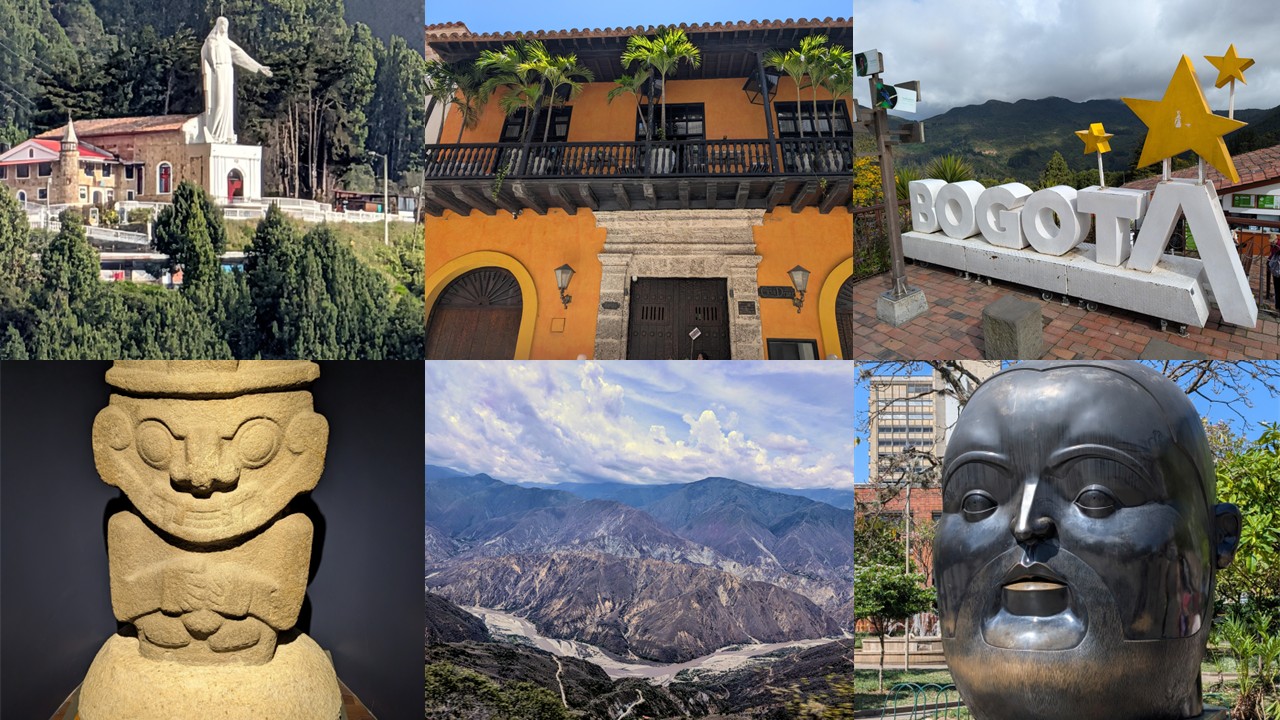
Bogotá — Layers
Bogotá provided the first clue.
From Monserrate, the city stretched across the high plateau, framed by mountains that have shaped movement, settlement, and identity for centuries. The scale was impressive, but what lingered afterward was the sense of layers.
The historic center revealed one layer. Plaza de Bolívar revealed another.
The Gold Museum introduced civilizations that existed long before modern Colombia emerged, while the Botero Museum demonstrated how contemporary artists continue interpreting the country’s culture and history through a different lens.
Bogotá resisted simplification. It introduced many Colombias existing at the same time.
Zipaquirá — Transformation of Purpose
Before arriving, it was difficult to understand how a mine could become one of Colombia’s most compelling spaces.
Inside, the transition felt remarkably natural.
The chambers remained underground. The walls remained salt. Evidence of labor remained visible everywhere. Yet the purpose had changed entirely. The experience was memorable not because of its scale, but because of its reinterpretation.
The cathedral acknowledged its origins without being constrained by them. The mine remained visible. Its purpose evolved.
Villa de Leyva — Continuity
Further north, Villa de Leyva revealed a different relationship with time.
Whitewashed buildings lined cobbled streets. The Plaza Mayor remained the center of public life. Generations had altered the community, yet its character endured.
The town did not feel frozen. It felt connected. The buildings remained useful. The streets remained active.
History felt less like an exhibit and more like part of everyday life.
Barichara — Craft
Barichara expanded on that idea through craft. Its earthen architecture reflected knowledge accumulated over centuries. Techniques survived not because they had been preserved in books, but because people continued using them. The Earth Painting workshop and Tapia Pisada construction methods made that visible.
Each wall represented more than construction. It represented accumulated experience.
The town itself seemed built from continuity.
Guane — Ancient Paths
Nearby, the Camino Real to Guane revealed another kind of inheritance.
The path existed long before modern transportation. Long before modern Colombia. Yet people still moved along it. The landscape changed little. The travelers changed constantly.
Walking the trail made it easier to understand how places continue shaping movement across generations. Some roads persist because people continue using them. Others remain relevant long after their original creators disappear.
The Camino Real felt like both.
Coffee, Cacao, and Chicamocha
In Santander, the focus shifted toward cultivation.
Coffee and cacao begin as agriculture. What emerges becomes culture. The process requires climate, elevation, patience, experimentation, and knowledge accumulated over generations. The farms demonstrated how communities transform landscape into identity.
The Chicamocha Canyon provided a dramatic counterpoint. Its scale reduced human activity to something much smaller.
The farms represented what people build. The canyon represented what they build within.
Both felt necessary to understanding the region.
Medellín — Becoming
Few destinations carried stronger assumptions before arrival than Medellín.
Long before the trip began, the city already existed through stories. News reports. Documentaries. Books. Television series.
A visit to the Pablo Escobar Museum revealed how powerfully a single narrative can shape outside perceptions of a place. The museum explained one chapter. The city itself revealed another.
Public transportation connected communities once isolated by geography. The Metrocable transformed access. Neighborhoods previously associated with conflict displayed public art, local investment, and community pride.
The contrast was impossible to miss. Neither story erased the other. Both remained part of the same city.
That tension became one of the most compelling observations of the journey. Medellín did not appear interested in denying its history. It seemed more interested in demonstrating that history would not entirely define its future.
Cartagena — Memory
Cartagena offered another perspective.
The walled city preserved physical reminders of colonial power, trade, culture, and conflict. Buildings endured. Meanings shifted.
Walking the streets felt like moving through layers of memory. Some celebrated. Some difficult. Some unresolved.
What remained impressive was not preservation itself. It was the willingness to continue engaging with what had been preserved.
La Boquilla — Community
The final days introduced a more personal scale.
In La Boquilla, mangrove restoration, drumming traditions, cooking, and community projects demonstrated how culture survives through participation rather than presentation. Nothing felt staged. The experiences reflected practices that remained relevant to the community itself.
The day concluded with a rum and chocolate tasting at El Arsenal. What began as a simple introduction to Colombian products became something more interesting. Each rum reflected different regions, ingredients, climates, and production methods. The chocolate carried similar distinctions.
The products were excellent. The lesson was more interesting. Flavor became another way of understanding place.
The most memorable insight came not from a monument, but from participation.
What Stayed
Before the trip, Colombia often appeared through a handful of familiar narratives. Some historical. Some political. Some shaped by headlines. The journey complicated all of them.
What remained afterward was not a single image or destination, but a growing resistance to simple explanations. Bogotá felt different from Barichara. Barichara felt different from Medellín. Medellín felt different from Cartagena. Each revealed a different version of the country.
The diversity itself was not surprising. The connections between those differences were.
Again and again, people built upon what already existed rather than discarding it. Whether through architecture, agriculture, transportation, craft, or community, the most memorable examples rarely involved starting over.
Perhaps that was the most unexpected observation. The farther the journey progressed, the harder Colombia became to summarize. That felt less like a problem and more like a success.
If We Did It Again
We would leave more room for the unexpected.
The itinerary introduced mountain towns, colonial cities, coffee farms, artisan workshops, growing urban centers, and Caribbean communities. The structure was excellent. The surprises were better. Some of the most memorable moments were not the locations themselves. They were the conversations. The workshops. The stories shared by guides, farmers, artisans, and residents.
Villa de Leyva and Barichara rewarded slowing down. The plazas, workshops, streets, and surrounding landscapes revealed themselves gradually. More time there would have been welcome.
Cartagena is the place we would most intentionally revisit. An illness late in the trip unexpectedly changed several plans and reduced our opportunity to simply wander. The historic center felt like a city best experienced without an agenda. Its streets, balconies, plazas, cafés, shops, and evening atmosphere invited exploration rather than completion. There was a sense that Cartagena still had stories left to tell.
The biggest change, however, would not involve adding destinations. It would involve adding time.
The strongest insights came through participation. The workshops. The agricultural visits. The community projects. The shared meals. The local conversations.
If we returned, we would build the trip around more of them. The destinations introduced Colombia. The people explained it.